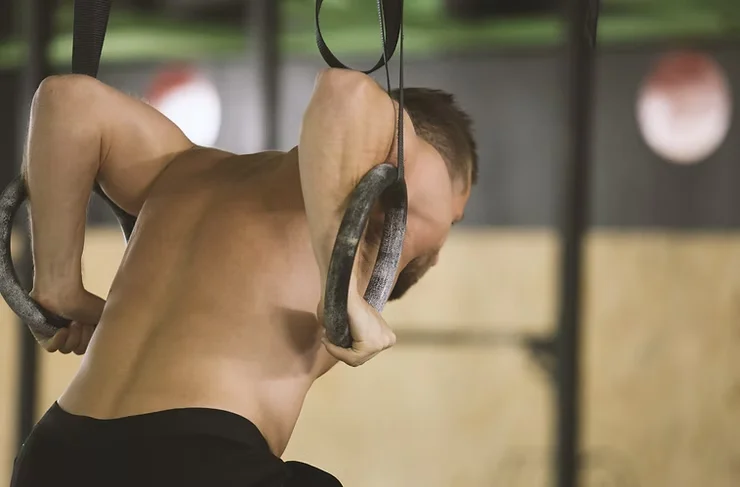

Mid-back pain is often blamed on tight muscles, but that explanation can miss a major part of the problem. If you have that nagging ache between your shoulder blade and spine, a deep sense of stiffness through the thoracic area, or a spot that always feels like it needs to be stretched but never truly changes, the issue may not be the muscle alone. In many cases, the real problem is how the ribs, thoracic spine, fascia, and surrounding soft tissue are moving together.
The ribs are not meant to be rigid. They are designed to move with every breath, every rotation, every side bend, and every time the arm lifts overhead. Each rib attaches into the thoracic spine, and those joints need a certain amount of mobility for the upper body to move well. When rib motion becomes restricted, the thoracic spine often loses motion with it. Once that happens, the surrounding muscles and fascia begin to adapt. Some tissues tighten to create stability, other tissues become overworked trying to create movement, and before long the body develops a pattern of compensation that can feel like chronic mid-back tightness.
This is one reason people can spend weeks or months stretching the same painful area without getting lasting relief. The discomfort may show up near the scapula, but the structure driving the problem may be deeper. If the ribs are not moving freely, the fascia around the rib cage and thoracic spine can become dense and restricted. The muscles attached into that area then begin to carry more load than they were meant to. What feels like a knot is often the body trying to protect an area that is no longer moving the way it should.
Fascia plays a major role in this pattern. Fascia is the connective tissue that surrounds and links muscles, bones, and joints throughout the body. It helps transmit force, create support, and coordinate movement between neighboring structures. Around the rib cage and thoracic spine, fascia helps connect the intercostals, serratus anterior, lats, rhomboids, thoracic paraspinals, and even the tissues of the neck and shoulder. When movement becomes limited, the fascia can begin to lose its normal glide. Instead of layers moving smoothly over one another, the tissues begin to feel thick, stuck, and resistant. That is one reason mid-back pain can feel deeper and more stubborn than a typical sore muscle.
Breathing also matters more here than most people realize. Every breath should create expansion and movement through the rib cage. If someone has poor posture, spends long hours sitting, has old injuries, or lives in a constant state of tension, that movement can gradually become reduced. The rib cage becomes less responsive, the thoracic spine becomes stiffer, and the surrounding tissues begin to hold more and more tension. Over time, the body starts borrowing motion from other areas. The muscles around the shoulder blade work harder, the neck begins to assist more than it should, and pain starts showing up in a place that may not be the true source of the restriction.
This pattern is common in people who sit at desks, train hard, drive long hours, or repeat the same movements in sport. It is especially common in bodies that live in one-sided patterns. When one side of the rib cage and thoracic spine stops moving efficiently, the surrounding fascia and soft tissue begin to reinforce that imbalance. The body can become strong in one pattern, but not free in that pattern. That is when people begin to notice they can twist easier one way than the other, breathe deeper into one side than the other, or feel an ongoing pull between the spine and shoulder blade that never fully goes away.
What makes this frustrating is that the painful area is usually not lying. The muscles really are tight. The fascia really is restricted. The tenderness is real. But the reason those tissues are tight is often more important than the tightness itself. Muscles around the scapula and thoracic spine frequently become overactive because they are trying to stabilize around restricted ribs, limited thoracic motion, and dense connective tissue. If the body does not feel motion where it needs it, it will create tension where it can.
This is why deep tissue massage and myofascial work can be so effective when they are used with a bigger understanding of the problem. The goal is not just to press on the sore spot. The goal is to change the quality of the tissue, improve fascial glide, restore motion through the rib cage, and help the thoracic spine move more naturally again. When the fascia begins to loosen and the tissues start gliding better, the muscles often stop working so hard. When the ribs regain mobility, the thoracic spine usually feels less compressed. When that happens, the body no longer has to protect the area with the same constant level of tension.
At Kick Massage, this is a big part of how we approach stubborn mid-back pain. Instead of only chasing the symptom, we look at how the rib cage, thoracic spine, fascia, and surrounding muscle chains are functioning together. By working through the layers of tissue around the ribs, scapula, lats, pecs, and upper back, we help restore mobility where the
body has become restricted and create better movement through the whole area. That is often what finally gives people relief when stretching alone has not worked.
If your mid-back keeps tightening back up, that is your body telling you something is off. It is not always just a tight muscle. When the ribs lose mobility, the fascia stiffens, and the thoracic spine stops moving the way it should, your body starts compensating and your performance takes the hit. Restore movement. Reduce tension. Get back to moving the way you are built to.